When the buyer is a sponsor, part of your company's price is set in the credit market.
Cheaper debt lifted what sponsors could pay for two years. On September 16 the Fed changed that.
01 What sponsors underwrite
For a business with positive cash flow, part of a sponsor's bid comes out of a financing model: how much debt that cash flow can support, and at what price. It isn't just a quality buyers admire; it's what the loan is underwritten against. Growth still drives what a buyer believes the business becomes; leverageability drives what a sponsor can pay today. Strategics run different math; sponsors run this one.
02 Cost of deal debt, 2023 to 2026
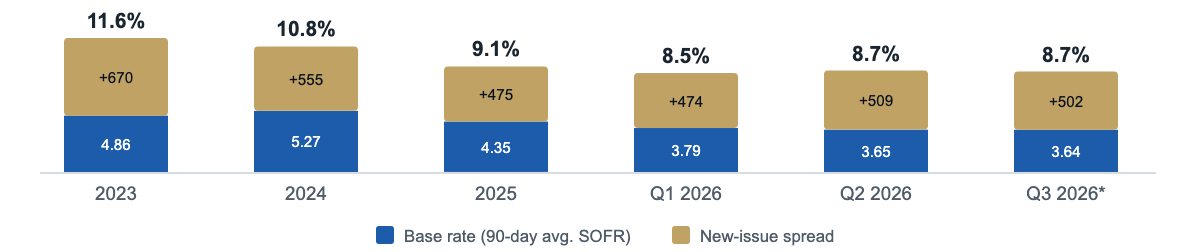
From 2023, the all-in cost of a new sponsor loan fell for two years. Spreads widened from S+474 to S+509 in the second quarter and have held near S+500 since. On September 16 the Fed raised rates a quarter point. What changed is not the level. It's that the direction is no longer something a seller can assume.
03 What it means
Waiting used to be free: the financing behind the next sponsor bid kept getting cheaper, so next year's number was likely to beat this year's. That's no longer the assumption to run on.
A sponsor's leverage shapes what they can pay, although once the deal closes at the agreed price it's their problem, not yours. A dollar at close is a dollar, unless you roll equity into the new company, take part of your price in an earnout, or accept a bid contingent on financing.
Bracton Partners advises founders of software, fintech and data companies on M&A. M&A advisory only; nothing here is a valuation, a recommendation, or an offer of any security.
Get the Founder Brief by email
One idea per issue on selling a software, fintech or data company, with the numbers behind it. It goes out by email first.
Thinking about a sale, now or in a few years?
Every conversation is confidential and carries no obligation.
Let’s talk